In recent years, San Francisco has fought with the issue of drug offenses, a challenge faced by many cities across the United States. However, amidst the complexities of this issue, there is a glimmer of hope: data reveals a significant decrease in drug offense incidents in the city. Through the lens of a calendar plot, we can visualize this decline and gain insights into the trends shaping San Francisco's battle against drug offense.
Understanding the Trends
Looking back at the data, particularly around the year 2008 and 2009, we observe a troubling peak in drug offence incidents in San Francisco. During this time, the city faced significant challenges related to unemployment, poverty, and homelessness accompanied by the economic recession. These factors are often linked to drug offences and can therefor be the reasoning behind this increase.
Despite the alarming spike in drug offence cases in 2008 and 2009, the following years have shown a interesting trend: a gradual decrease in drug-related incidents. This decline signifies a positive shift in the city's drug landscape, reducing drug incidents dramatically.
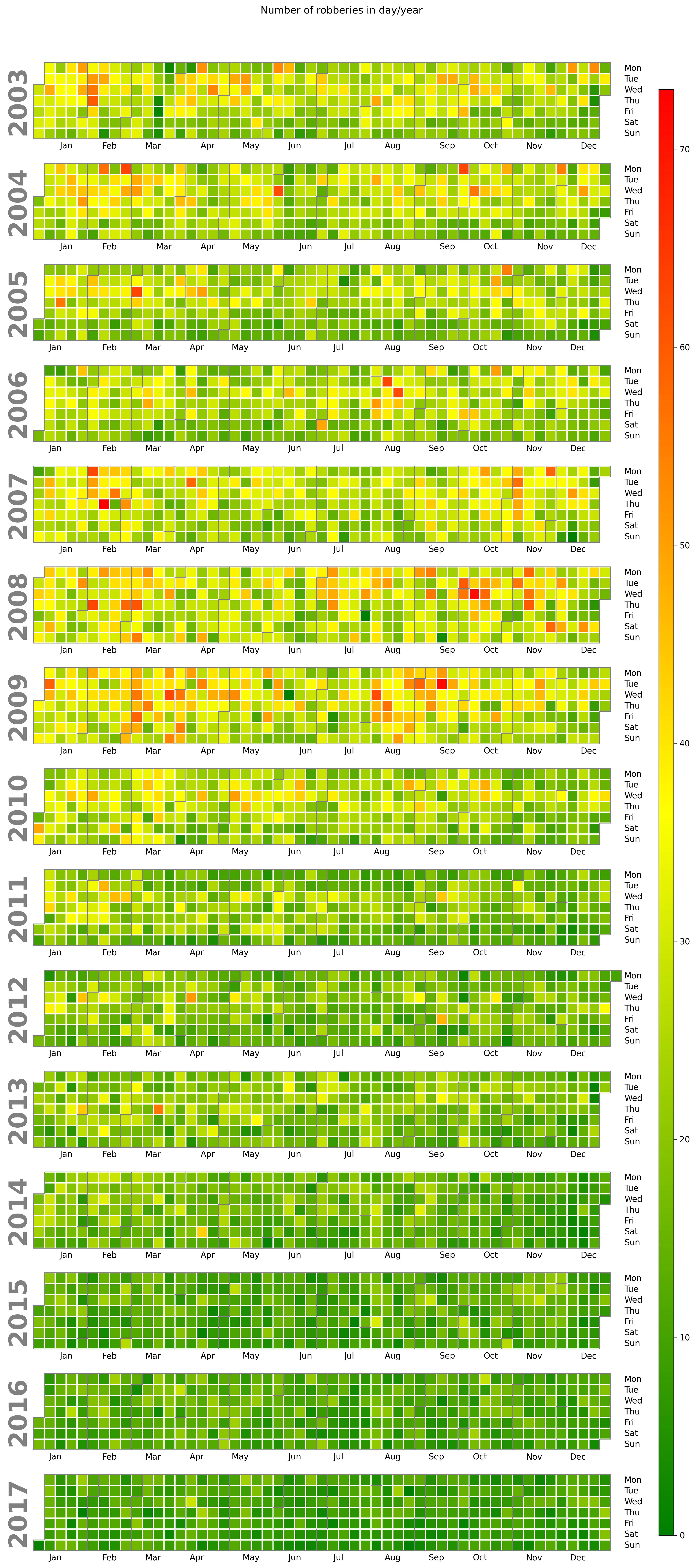 San Francisco's Drug Offense Incidents Over Time
As we can observe in the accompanying calendar plot, we transition from a heatmap dominated by red and orange hues in the earlier years to an overall green heatmap in more recent years. This shift indicates a positive change, suggesting that San Francisco is making changes in addressing drug offenses and moving towards a safer and healthier community.
San Francisco Scandal - Drug laboratory
In 2010, San Francisco's police department's drug lab experienced controversy. Prosecutors had to drop approximately 1400 drug related cases, because news came around that an technician was stealing cocaine used as evidence. This showed a systamatic failing in San Fransisco and was casting doubt on the validity of drug related prosecutions during that period.
All the concerns about reliability and credibility of drug-related evidence influenced the effectiveness of the law enforcement efforts.
While the scandal exposed vulnerability in the San Francisco law enforcement, it also served as a catalyst for change and enhanced the city's responce to drug-related issues.
Looking Ahead: Shifting focus and challenges
Former San Francisco Police Chief and district attorney George Gascon's, approaches drug enforcement with a strategic shift towards targeting mid-level drug dealers and offenses associated with violent crimes. We see a decline in drug arrests, signaling a shifting landscape in drug enforcement strategies. Professor Craig Reinarman of UC Santa Cruz also highlights that historically, the majority of the drug related arrests have targeted petty offenses, which correlates to the large amount of drug offenses before 2010 and now the drastic decrease. Also in 2014, California voters approved Prop 47, a measure reducing drug possession from a felony to a misdemeanor, further impacting the data landscape.
Moving Forward
However, it's important to note a potential error in the data interpretation stemming from these changes. While the data reflects a decrease in drug-related incidents, the true reason behind this decline may be attributed to the shift in strategy rather than an actual reduction in drug offenses. Consequently, while the data indicates a decrease, it may not accurately represent the extent of ongoing drug-related issues, as they are now viewed differently in the eyes of the law enforcement system.
As we navigate through these changing dynamics, it's important to consider both numbers and people's experiences. By having open dialogues, working together and using strategies backed by evidence, we can better tackle dryg-related issues in San Francisco and elsewhere and move more effective
Photographs by Pexels.
Reference from Deseret News, The New York Times, SFGATE and StoptheDrugWar.ord